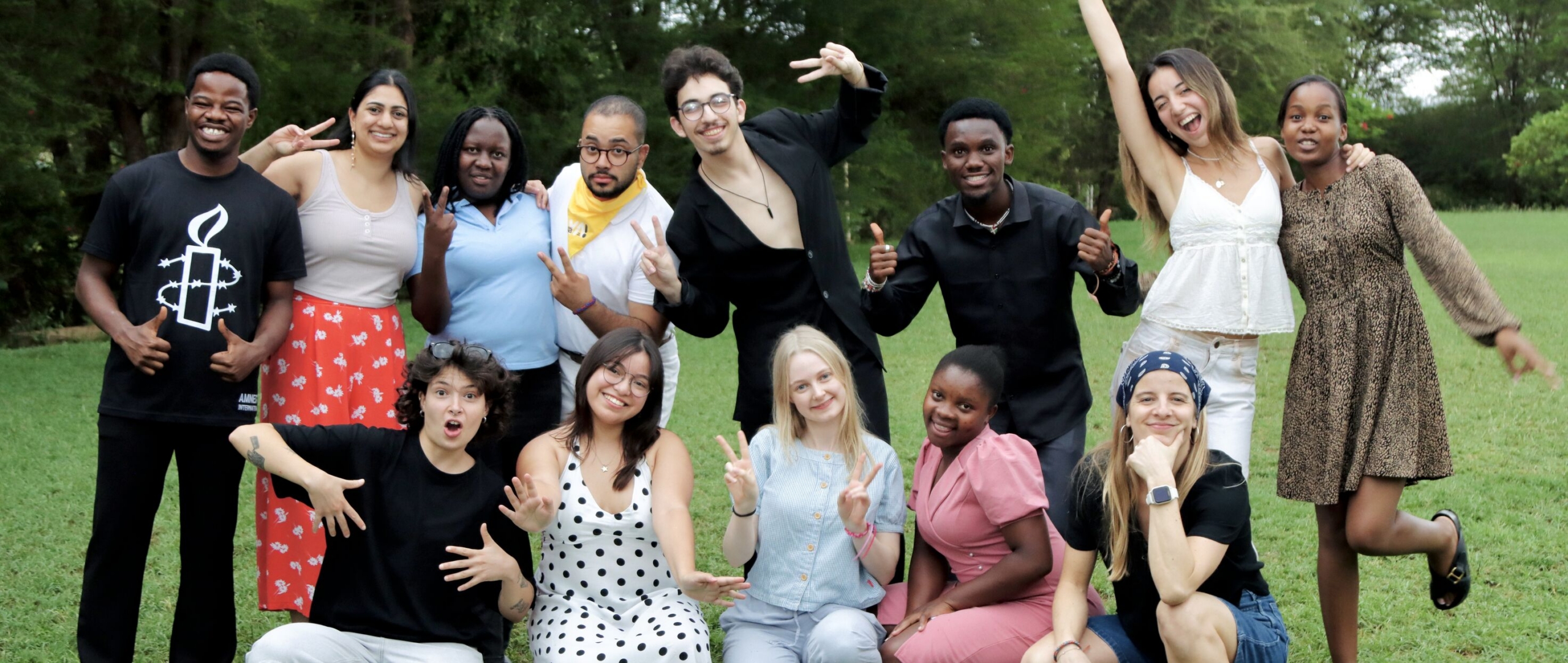
By Lisa Dittmer, Amnesty International’s Children’s Digital Rights Researcher, and Paloma Candia and Ahmed Dhman both Amnesty International’s
Digital Rights Champions
, a global network of child and youth human rights defenders.
This article was first published in TechPolicy.Press
Children’s online safety has become a leading political issue as concerns about Big Tech harms have moved from academic debates to bestseller lists and mainstream news. French President Emmanuel Macron hailed France’s teen social media ban as “
leading the way in Europe in protecting our children and our teenagers
.” France’s top court later
blocked the law
, citing privacy and freedom of expression concerns. United Nations (UN) Secretary-General Guterres has called for an
artificial intelligence (AI) Child Safety Pledge
. Yet amid the flurry of high-level pledges and the rush to protect “our children,” the voices of one demographic are noticeably absent: children themselves.
A brief prerecorded video aside, not a single child got to speak when a
new state coalition for the protection of children
launched its work at the UN AI Dialogue in July. Kenya, one of the state parties to the coalition, is currently debating a new AI bill that
lacks any child-specific protections or consultation mechanism
. The absence of children and young people in policymaking spaces and the failure to recognize their demands and needs are clearly linked. Globally, a mixture of Big Tech state capture, political shortsightedness and a rise in digital authoritarian practices is hollowing out children’s rights just as the world proclaims to finally making children safe online.
Mitigating harm rather than fulfilling rights
Children and young people are frequently treated as passive subjects who need to be saved through regulation rather than as participants in shaping the rules that affect them. The UN Convention on the Rights of the Child recognizes children’s right to be heard, but their participat
… [more]