This story was reported and produced by Injustice Watch, a nonprofit newsroom in Chicago that investigates issues of equity and justice in the court system. Sign up here to get their
weekly newsletter
.
Minutes after Riverton
police officer Brad Herzog ran 31-year-old Daniel Torrez Perez’s name through a law enforcement database one night in April 2025, his phone rang. It was the FBI.
“Every bell and whistle went off,” said Jack Griffin, the agent on the other end of the line.
Herzog had pulled Torrez over for going 15 miles above the speed limit on a rural two-lane highway just northeast of Springfield, Illinois. Herzog ran Torrez’s name and date of birth on his squad car laptop to confirm his identity. His search tripped a federal alert, and within minutes Griffin was on the line.
The exchange was captured on body-worn camera footage obtained by Injustice Watch through a Freedom of Information Act request.
Torrez had an administrative Immigration and Customs Enforcement warrant, meaning ICE was seeking to arrest him for deportation.
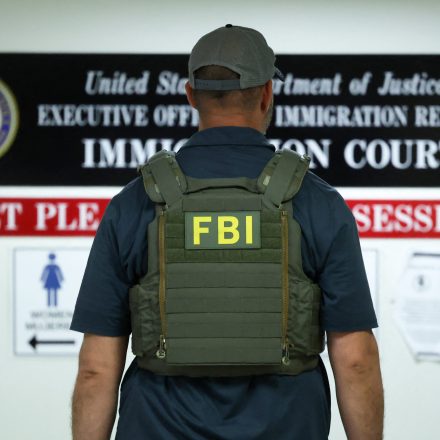
Griffin was with the FBI, not ICE. His call that night reflects the
bureau’s increased role in immigration enforcement
in the second Trump administration.
Under state law, Herzog couldn’t hold Torrez for federal agents.
In 2017, Illinois passed the TRUST Act on the principle that immigration is governed by federal civil law and local police have no business enforcing it. It was a sentiment bipartisan enough that a Republican governor, Bruce Rauner, signed it.
The law limits Illinois law enforcement agencies’ ability to assist immigration agents: They can’t transfer people to ICE custody without a criminal warrant signed by a judge, allow ICE agents to call or visit someone in a local jail, or “assist in any capacity with an immigration agents’ enforcement operations.”
Griffin knew that the immigration warrant was off-limits to Herzog.
“I know you can’t act on that,” Griffin told him. “I know this puts you in a
… [more]

