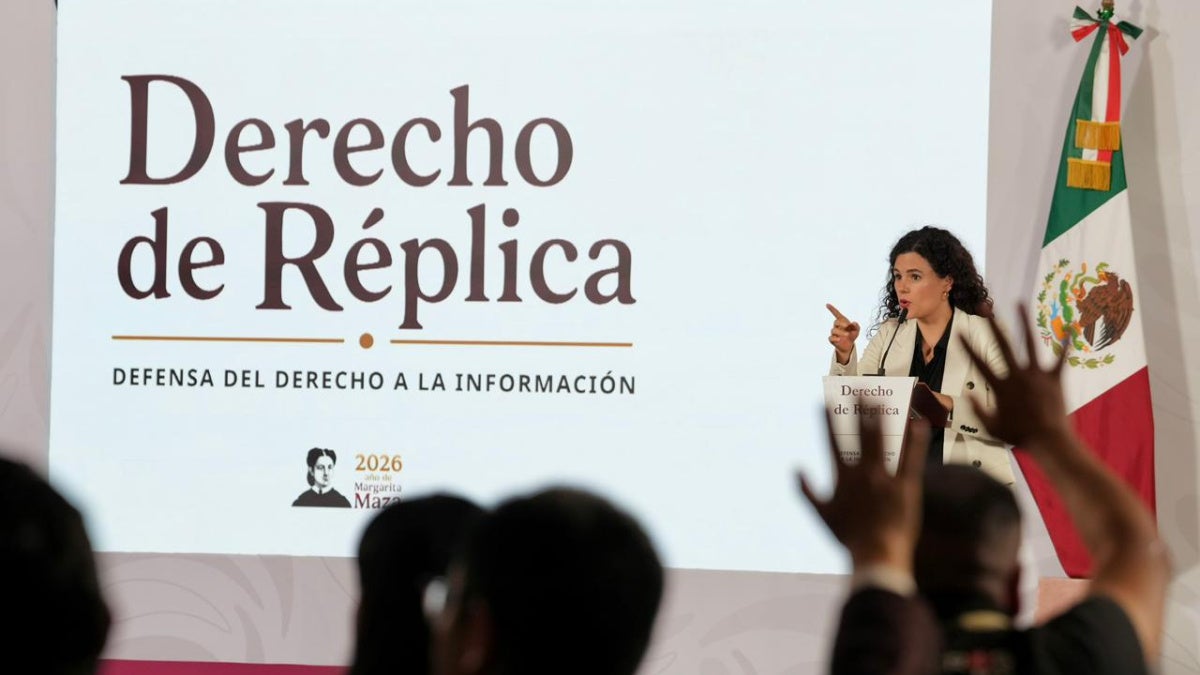
Chief Legal Advisor to the Federal Executive, Luisa María Alcalde Luján, speaks on the “Right of Reply” segment broadcast at the National Palace in Mexico City, June 3, 2026.
(Mexico City) – Mexico’s government has proposed regulations on “rights of audiences” that pose a threat to freedom of expression, Human Rights Watch said today.
On July 28, 2026, the government announced a draft regulation that, if issued, would grant the Telecommunications Regulatory Commission—a body under the executive branch—broad powers to fine media outlets that publish allegedly “false,” “decontextualized,” or “outdated” information.
“Accuracy is a cornerstone of responsible journalism, but the government should not be in charge of deciding whether media outlets are doing their job well,” said Jorge Peniche, senior Mexico researcher at Human Rights Watch. “The Mexican government should revise this draft of administrative rules to ensure it does not threaten free speech and independent media.”
Mexican law recognizes the rights of audiences as part of people’s right to receive information and has established, since 2014, that broadcast outlets are required to self-regulate through codes of ethics, and to appoint internal ombudsmen’s offices where people can present claims. The new proposal, however, would allow people to appeal a decision by an ombudsman to the Telecommunications Regulatory Commission. Among other oversight powers, the Commission would be allowed to overturn these decisions, and fine outlets up to 1 percent of their annual taxable income if it considers that they published “false,” “decontextualized,” or “outdated” information.
Although Mexican law provides that the Commission should have “technical independence” to carry out its decisions, the Commission operates under the ministerial-level Agency for Digital Transformation and Telecommunications, in the exe