Shortly before midnight
on August 4, Israeli settlers
arrived
at the home of Loui Abu Ridi, a Palestinian American, in the village of Qusra in the occupied West Bank.
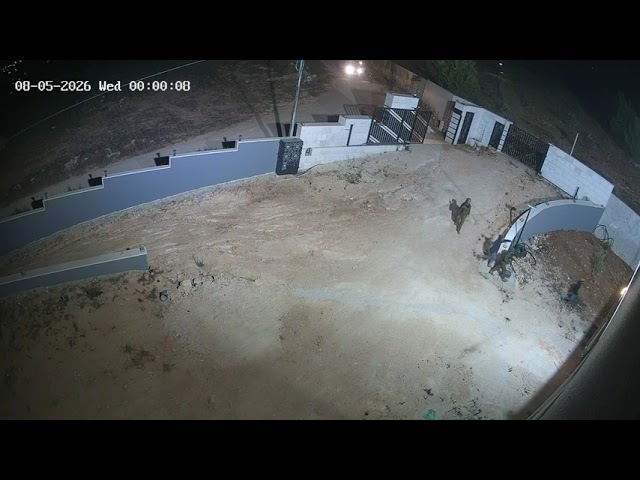
By then, settlers had already been attacking the house for months. The Abu Ridi family had hired contractors to install an additional fence around their property, and when the settlers drove up to the home on an ATV on August 4, workers were busy erecting the fence.
“We called the Israeli police so they would protect us from them,” Qusai Abu Ridi, Loui’s brother, told The Intercept. “The army came after half an hour.”
About two and a half hours after the settlers’ arrival, the Israeli military did take action — but not against the settlers.
The workers installing the fence would end up
arrested and taken away
by Israeli soldiers while the settlers who were trespassing roamed around the property freely, according to security camera footage reviewed by The Intercept.
The Israeli military’s actions that night against the workers stand as an example of the Israeli government’s broader role in and response to settler violence in the occupied West Bank — emboldening the
settlers’
lawless
behavior
as they forcibly
displace Palestinians
from their homes and land.
Just a few days later on August 9, settlers began a siege on three homes in Qusra, including the Abu Ridi’s, blocking the main road and trapping families inside their houses with limited water and food.
Despite claims by the Israeli military that it has removed Israeli citizens since the siege began in Qusra and that they are minimizing the impact of operations on Palestinian civil life, the videos from before and during the siege show a village that remains under threat from settlers — with Israeli soldiers doing little to stop them.
“We are still under siege. There’s military all around the house.”
“We are still under siege. There’s military all around the house,” said Abu Ridi, after traveling from Ohio last week to
… [more]