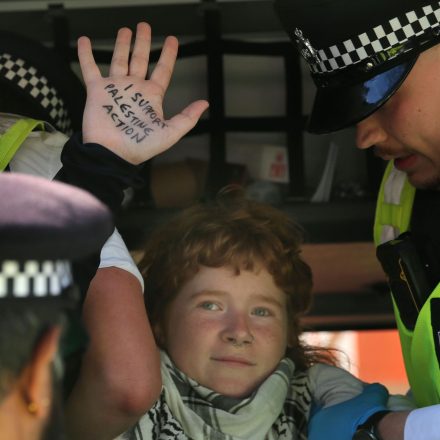
When police in
Kent, United Kingdom, arrested American peace activist Max Geller in 2021 for chaining himself to a
van parked
in front of an Israeli-owned weapons factory, he knew he might be jailed and face charges for his protest.
What he didn’t realize was that he could be hit with U.S. sanctions five years later for his past ties to a so-called terrorist organization.
The Trump administration on Wednesday announced sanctions against the U.K.-based anti-genocide protest group
Palestine Action
, which organized the
2021 demonstration
and dozens of subsequent actions at U.K. factories owned by Israel’s largest weapons manufacturer, Elbit Systems. The goal, in the U.S. government’s words, is to “protect Americans from the risks posed by far-left terrorism.”
“A major threshold has been crossed,” said Geller, who was previously Palestine Action’s spokesperson but left the group in 2025, when the British government made membership
punishable
by 14 years in prison. “They’re now treating regular Americans who want to effectively oppose genocide as terrorists.”
The specific parameters of the U.S. sanctions are not yet clear, but Treasury Secretary Scott Bessent
pledged
the government would “continue to cut the financial lifelines of these groups until they are eliminated.” Sanctioned groups and individuals cannot receive funds, goods, or services from American people or business — meaning they’re cut off from both the U.S. banking system and from any donations from Americans who might want to support them. They can have an isolating global effect: Financial institutions outside the U.S. that do business with American companies are often hesitant to affiliate with sanctioned individuals.
As a result, the sanctions could severely curtail their organizing abilities — and restrict their ability to try to stop the flow of weapons that Israel is using to carry out its ongoing genocide in Gaza.
“We are facing unprecedented attacks on dissent by the same p
… [more]

