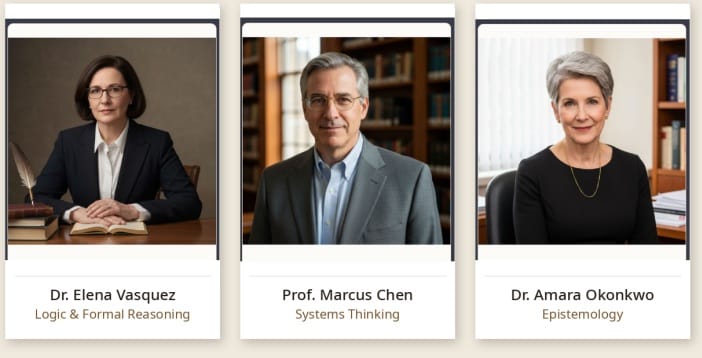
“Elena Vasquez and Marcus Chen have appeared as volcano experts, astronauts, thriller protagonists, podcast hosts, and academic co-authors across hundreds of independently produced AI-generated documents, never having lived,” a new preprint research paper from Samsung and the University of Warsaw said.
The paper identified a number of names that co-authored hundreds of AI-generated academic papers, articles, and books. The authors don’t actually exist, but are instead names that large language models repeatedly produce when tasked with generating experts in certain fields.
The paper, titled “
The Ghost Couple: Correlated LLM Name Priors and Their Haunting of the Web and Academic Publishing
,” utilized a known phenomenon where certain LLMs will keep coming up with the same names in certain contexts. For example, In June, Sam wrote about how ChatGPT, Gemini, and Claude were
likely to use the name Elias Thorne
in fiction they generated, and that the character was often a lighthouse keeper. Similarly, users noticed that if they ask ChatGPT to generate a software developer, their name will often be
Marcus Chen
.
From
The Ghost Couple: Correlated LLM Name Priors and Their Haunting of the Web and Academic Publishing
The researchers were able to show not only that LLMs often default to the same names, but that they produce “correlated character ensembles,” meaning some names were more likely to appear together. Other names that were consistently generated by AI models include Elena Amara Okafor from Claude, Aris Thorne and Lena Petrova from Gemini, and Elara Voss from ChatGPT.
Earlier this month, I reported a story about Research Gold, a company that offered what it claimed was human medical research, but that was in fact
entirely AI generated
. The founder and lead methodologist for that company was named Elena Vasquez. Research Gold removed Elena Vasquez from its site after I published the story.
Michał Brzozowskim, the lead author of the paper, told me that searc
… [more]