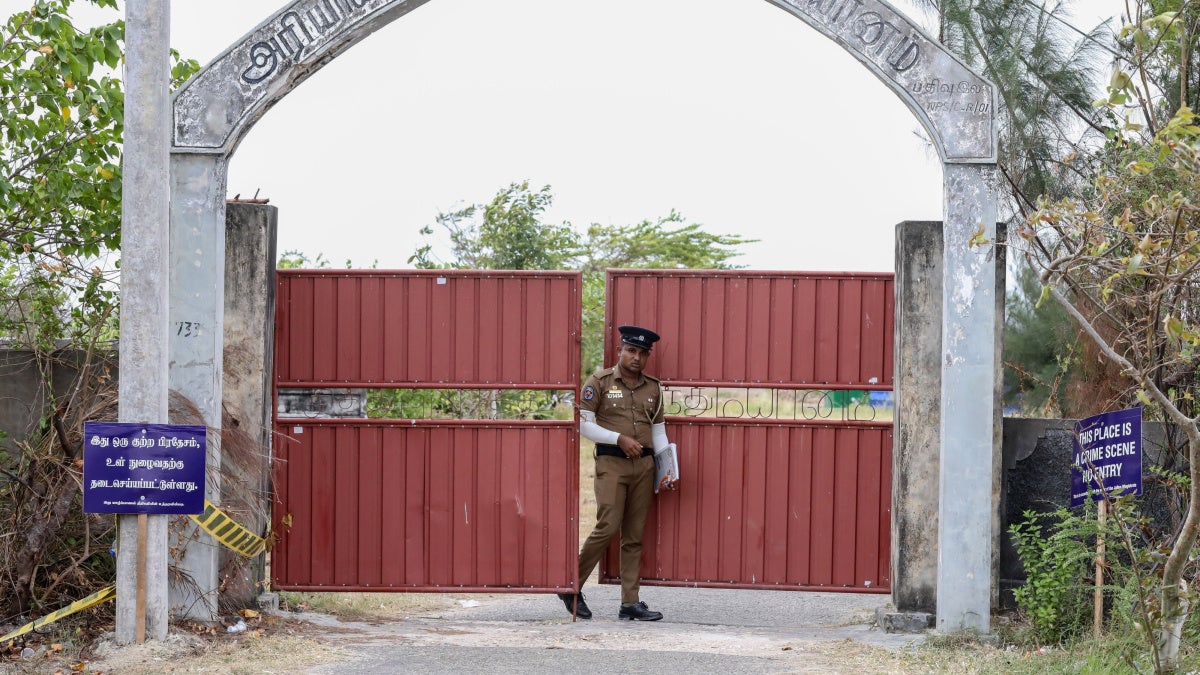
A police officer stands guard in front of the Chemmani mass grave site in Jaffna, Sri Lanka, July 26, 2025.
The Sri Lankan government’s prosecution of past grave abuses has lagged, raising concerns for future progress.Many cases of forced disappearance, torture, and killing remain stalled, while families of victims and human rights defenders face threats and intimidation. The Dissanayake government should jumpstart its efforts to obtain genuine accountability for decades of impunity, while the UN high commissioner for human rights and Human Rights Council should urge the government to demonstrate its commitment to justice.
(Geneva, September 1, 2026) – The Sri Lankan government’s prosecution of past grave abuses has lagged, raising concerns for future progress, Human Rights Watch said in a report released today. United Nations officials and UN member countries at the Human Rights Council should call on the government led by President Anura Kumara Dissanayake to show greater determination to address emblematic rights cases and cooperate with international accountability efforts.
The 49-page report, “‘Not Genuine with Justice’: Sri Lanka’s Lack of Will to Prosecute Past Abuses,” provides an overview of domestic justice efforts in seven prominent cases of grave abuses in which the Dissanayake government has made a measure of progress since taking office in 2024. Human Rights Watch found that many emblematic cases, including a massacre of aid workers, the targeting of journalists, and enforced disappearances of academics and others, remain stalled, while families of victims and human rights defenders face threats and intimidation.
“The Dissanayake administration needs to break from past government practice of delaying and denying justice for grave abuses,” said Lucy McKernan, UN Human Rights Council director at Human Rights Watch. “The UN Human Rights Counci