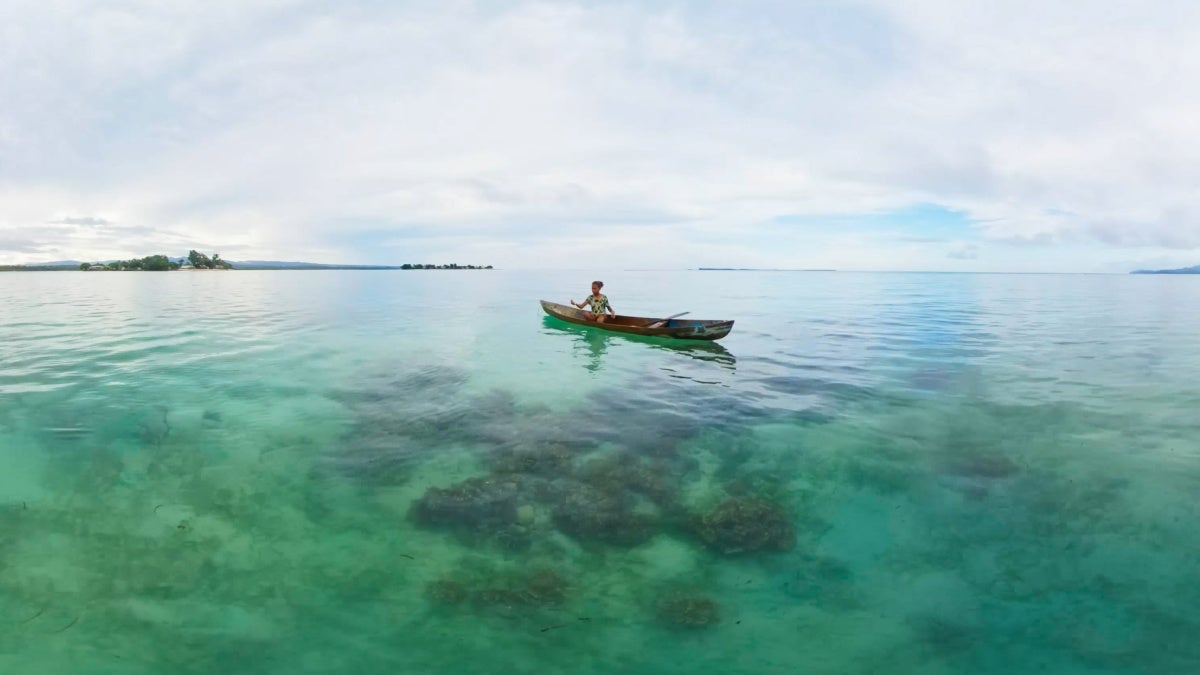
A girl in her fishing boat off the coast of Malaita Province, Solomon Islands.
Greetings from the Venice International Film Festival, where amidst the cinematic glamour, we are launching something raw and powerful: “Solwata”.
It is an immense privilege to be here sharing this new immersive documentary—co-created with the communities of Walande, Ngongosila, and Kwai in Solomon Islands, co-produced with Human Rights Watch, Agog, and NowHere Media, and narrated by Mark Ruffalo—bringing the realities of climate relocation to this global stage.
When first approached by colleagues about using extended reality for advocacy, I had doubts. As a researcher, I typically rely on exhaustively fact-checked reports with detailed footnotes to convey findings. But seeing how deeply moved the audience is as they step out of headsets, I am won over.
Years of research in Panama, Senegal, and the Philippines show how the climate crisis has forced coastal communities to make impossible choices. Planned relocation is a last-resort measure, and a profoundly complex human rights challenge. When an entire community must move, everything—from their cultural heritage to their land rights—is on the line. Above all, policies should protect indigenous communities’ right to self-determination, to make adaptation decisions on their own terms and timelines.
Traditional research and reports are essential means for communicating these complexities, but the stakes demand we try every tool at our disposal to break through to wider and more diverse audiences.
“Solwata” provides a new way to engage audiences on the human story of climate relocation. It transports viewers across oceans and time zones to stand alongside the Solwata (saltwater) people. It allows audiences to witness the Walande communities’ strength and determination to stay together as a community against all odds, even after ri