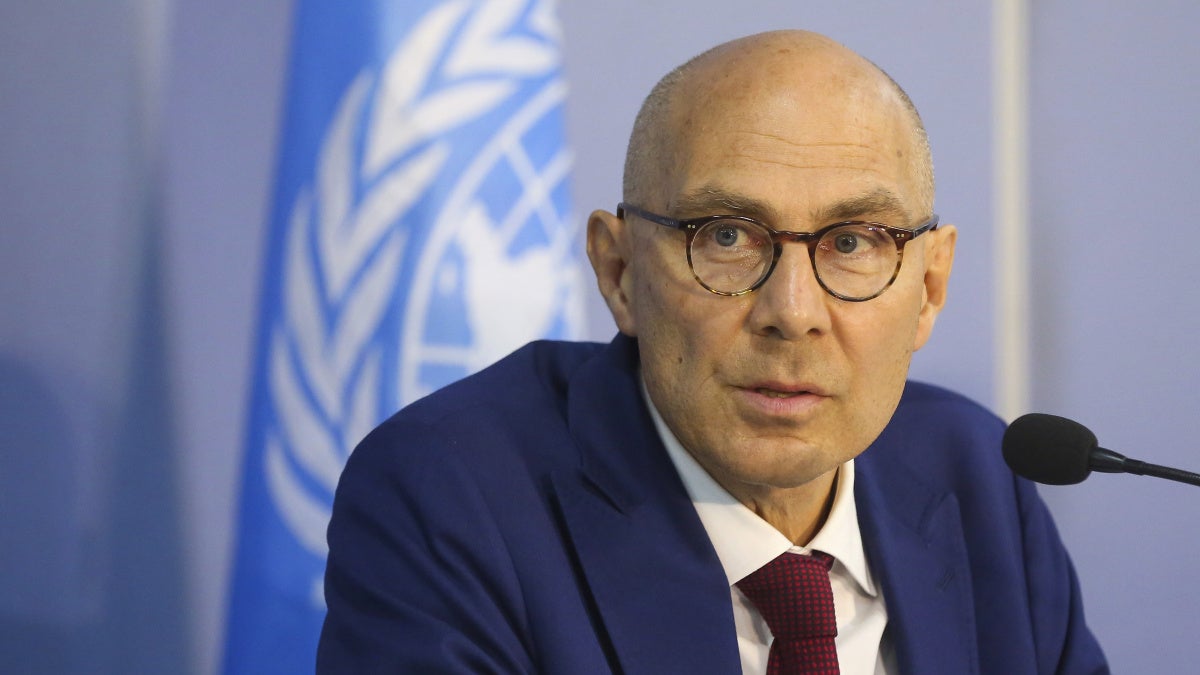
United Nations High Commissioner for Human Rights Volker Turk holds a press conference in Colombo, Sri Lanka, June 26, 2025.
Seventeen years after the end of Sri Lanka’s civil war, the latest report by the United Nations High Commissioner for Human Rights, Volker Türk, updates the current human rights situation in the country.
The government of President Anura Kumara Dissanayake took office in September 2024, promising justice for past rights violations. Yet, as the high commissioner’s September 3 report concludes, beyond progress in a few important cases, “there has been no recognition or accountability for crimes under international law, gross human rights violations, and serious violations of international humanitarian law committed by all parties” during the war with the Liberation Tigers of Tamil Eelam, which ended in 2009.
Human Rights Watch raised similar concerns in its September 1 report, which documented limited progress in some emblematic cases, but no movement in cases dealing with enforced disappearances, the killing of aid workers, or the targeting of journalists. The government has failed to follow through on its promise to establish an independent public prosecutor’s office, or undertake legal or structural reforms needed for accountability. The Dissanayake government has also not accepted the Sri Lanka Accountability Project, established by the UN Human Rights Council to collect evidence of serious rights abuses.
The Sri Lankan government still uses the repressive Prevention of Terrorism Act to harass and arrest human rights defenders, journalists, and families of victims. They face surveillance and questioning by state intelligence agencies, particularly in northern and eastern Sri Lanka. The high commissioner’s report calls on the government to impose a moratorium on using the law pending its repeal, and to release people long detained