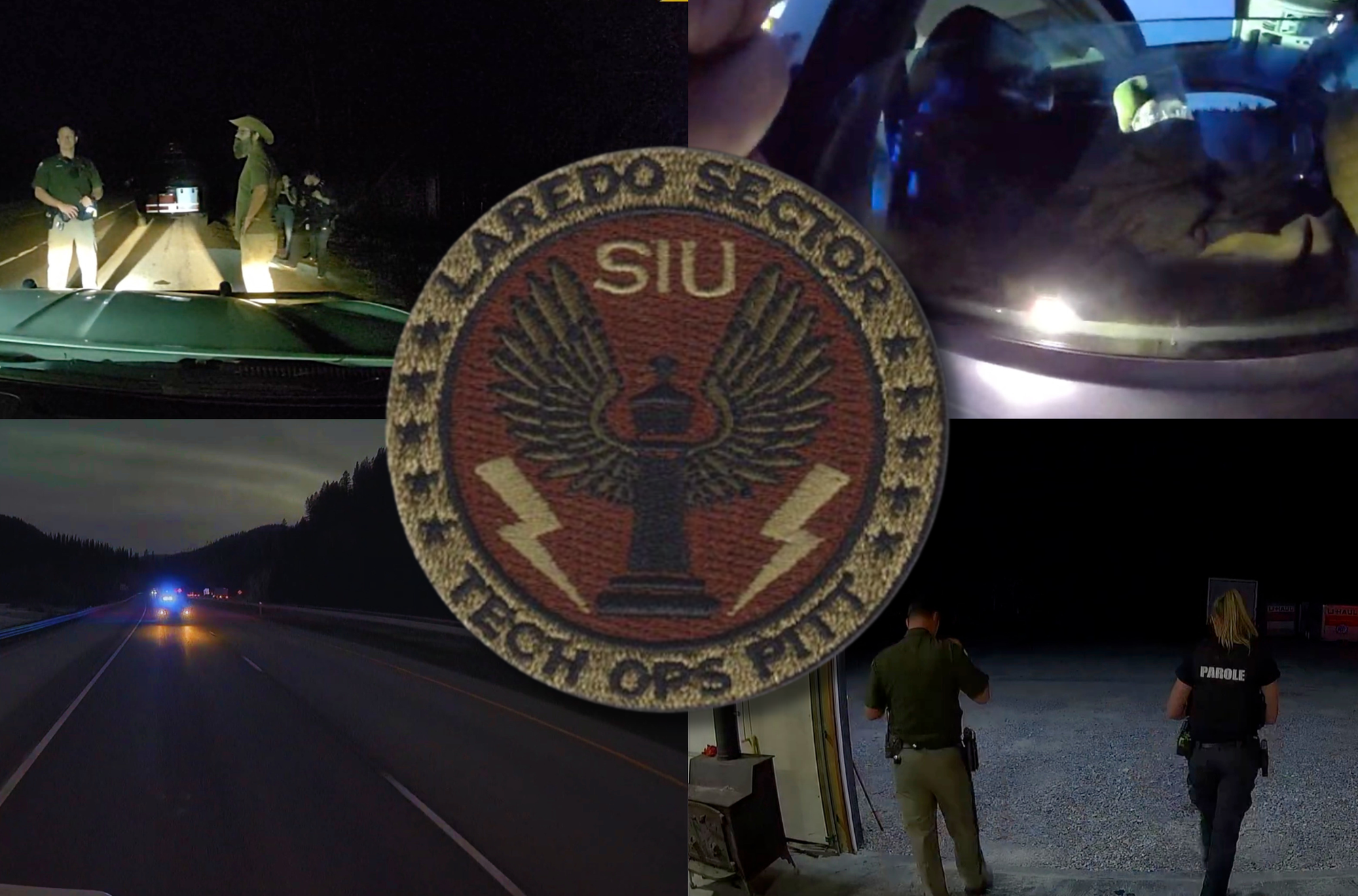
Border Patrol is running secretive predictive policing units that analyze Americans’ financial activity and other data, then feed that intelligence to local police who pull people over who are not suspected of any specific crime, but which the government thinks may be worth searching, 404 Media has found.
The units, the name of which 404 Media is revealing here for the first time, are called Predictive Intelligence Targeting Teams (PITT). In one case, a PITT analyzed the financial activity of a man who was driving across Montana, and local authorities stopped him under the pretense of an obstructed license plate and charged him with a DUI.
404 Media identified one PITT in the Spokane Sector, Washington, which polices the U.S. border with Canada, and another in the Laredo Sector, Texas, which polices the border with Mexico. The findings add to
an Associated Press investigation
from last year which found Border Patrol was using automatic license plate readers (ALPRs) as part of the same wide-spanning predictive policing program.
“The bottom line is genuine probable cause cannot be synthetically generated,” Jake Laperruque, deputy director of the Security and Surveillance Project at the Center For Democracy & Technology, told 404 Media in an email. Here Border Patrol seems to be “using parallel construction to cloak the reason behind its car stops in secrecy. If we can't meaningfully review and evaluate these systems, we can't trust them,” he added.
💡
Do you work at DHS? Do you know anything else about these predictive policing teams? I would love to hear from you. Using a non-work device, you can message me securely on Signal at joseph.404 or send me an email at joseph@404media.co.
Predictive policing is
a highly controversial practice
that police departments and federal agencies are increasingly turning to. The practice is designed to find people who may have committed crimes, but at the moment, no evidence of them doing so exists. Broadly, law enforcement may

Surveillance & Privacy
OpenAI Agents Hacked Another Website
Multiple dystopian elements: tens of millions of drivers' licenses (biometric + personal data) sold on dark web represents mass… [more]

