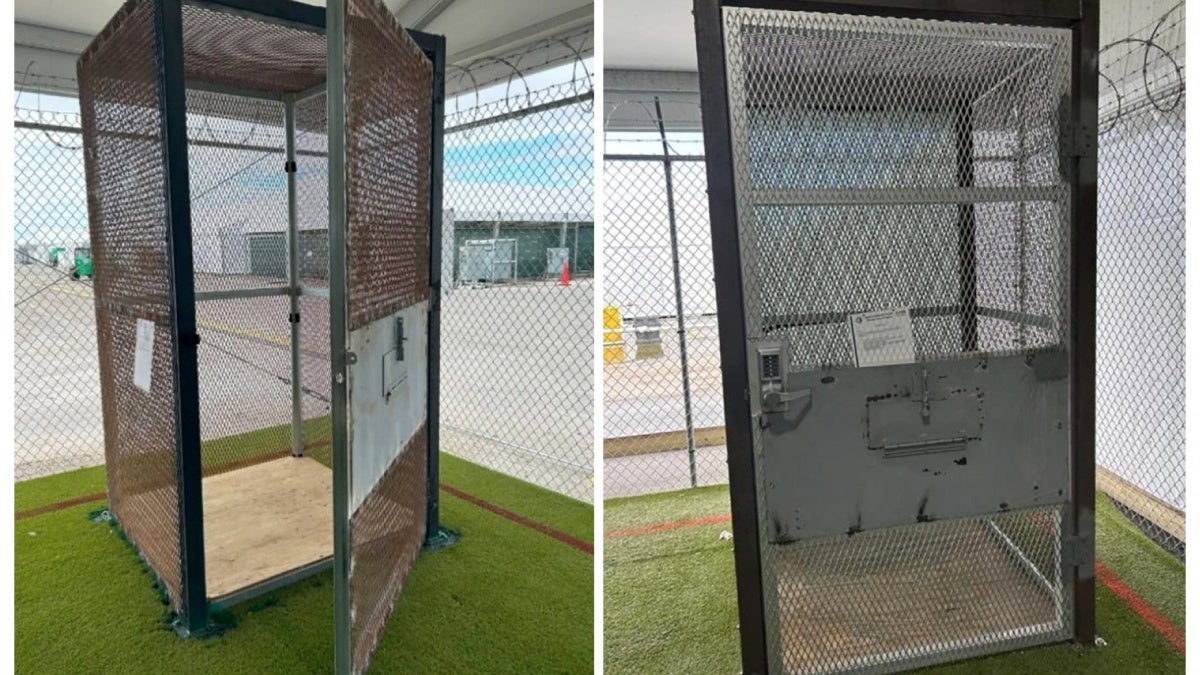
A small metal enclosure which was used to hold detainees, reportedly for up to two hours, as seen during an unannounced inspection by the Department of Homeland Security Office of Inspector General (DHS OIG) at ICE's now-closed immigration detention center Florida Soft-Sided Facility (FSSF) also known as Alligator Alcatraz, in Ochopee, Florida, January 21, 2026.
On September 11, the US Department of Homeland Security’s Office of Inspector General published reports outlining findings from visits to Krome North Service Processing Center and the now-shuttered “Alligator Alcatraz,” immigration detention facilities in Florida. The oversight body found that the facilities failed to comply with DHS standards, including for medical care, environmental health and safety, and—in the case of Krome—use of force.
One of the most disturbing findings at Alligator Alcatraz was the use of “small metal enclosures”—essentially cages—to hold detainees for up to two hours, which the inspector general said “does not align with standards for humane treatment.” The report states that in at least one case, this may have been used as a “disciplinary tool.”
The inspector general said that confining people in cages “presents significant risks to detainee health and well-being.”
While Alligator Alcatraz officially closed on June 25, there are more than 200 active immigration detention facilities throughout the United States. Human Rights Watch has found cruel, inhuman, and degrading treatment at several of these facilities, including Krome.
The new report on Krome comes over a year after a May 2025 visit to the facility. The inspector general documented troubling conditions and violations of medical and use-of-force standards, including the inappropriate use of a chokehold against a detainee. Research by Human Rights Watch between May and June 2025 documented substandard medical car


