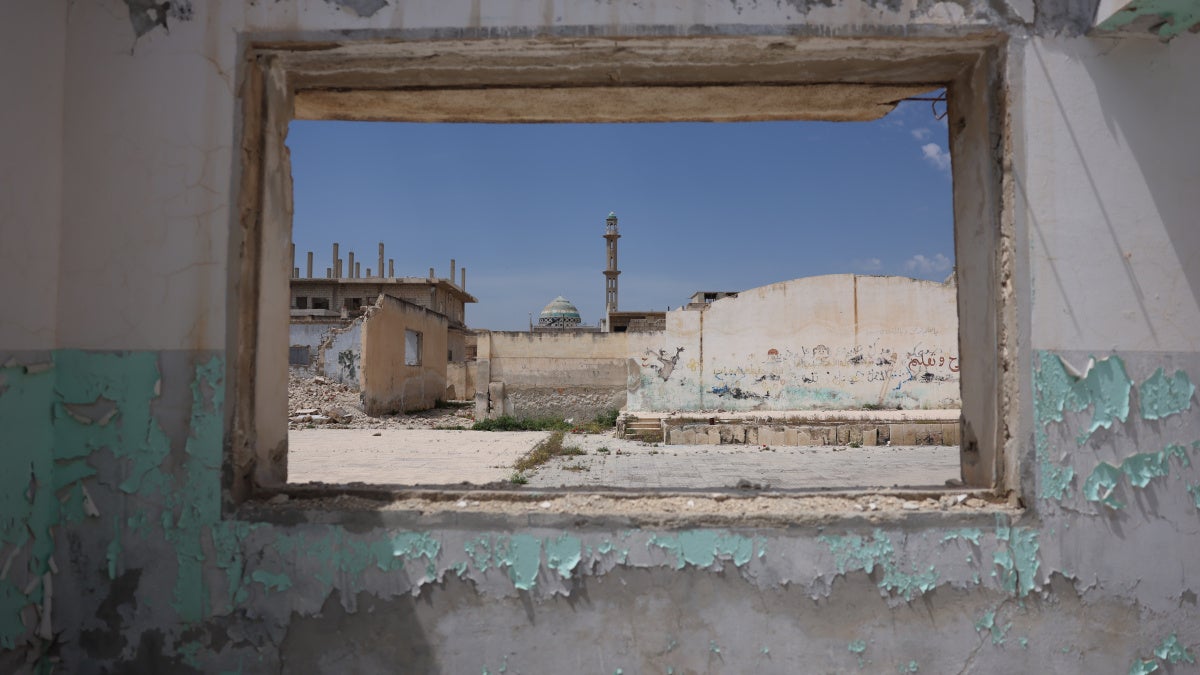
A destroyed school in Ghadfa village, Idlib countryside, Syria.
(Amman) – The Syrian transitional government is signing billions of dollars in reconstruction deals without a human rights framework that would ensure that rebuilding respects, protects, and fulfills the rights of affected people, Human Rights Watch said today.
In March 2026, the transitional government unveiled a national recovery blueprint, and billions of dollars in international pledges for aid, and financing and investment commitments have followed. But the legal frameworks governing reconstruction do not require the government or developers to consult affected communities, including those still displaced, before projects are approved. The process should also require negotiating—instead of imposing—compensation terms and providing an independent mechanism for residents to challenge decisions about their homes and land.
“Syria's reconstruction is progressing slowly, but without a rights framework, it could leave many Syrians with a raw deal,” said Hiba Zayadin, senior Middle East advisor at Human Rights Watch. “The legal framework being finalized now will determine whose homes are rebuilt, whose claims are recognized, and whose voices are heard.”
Human Rights Watch conducted field research in Syria in May 2026, including interviews with residents of Ghadfa village in the Idlib countryside who had returned from displacement camps. Human Rights Watch also interviewed an activist, whose identity is being withheld for their protection, calling for the repeal of Decree 66 and the restoration of property rights in Marota City.
Human Rights Watch reviewed Syrian government statements and documents including President al-Sharaa's March 2026 remarks on reconstruction published by the Syrian Arab News Agency, and the Constitutional Declaration of March 2025. Human Rights Watch also reviewed repo


