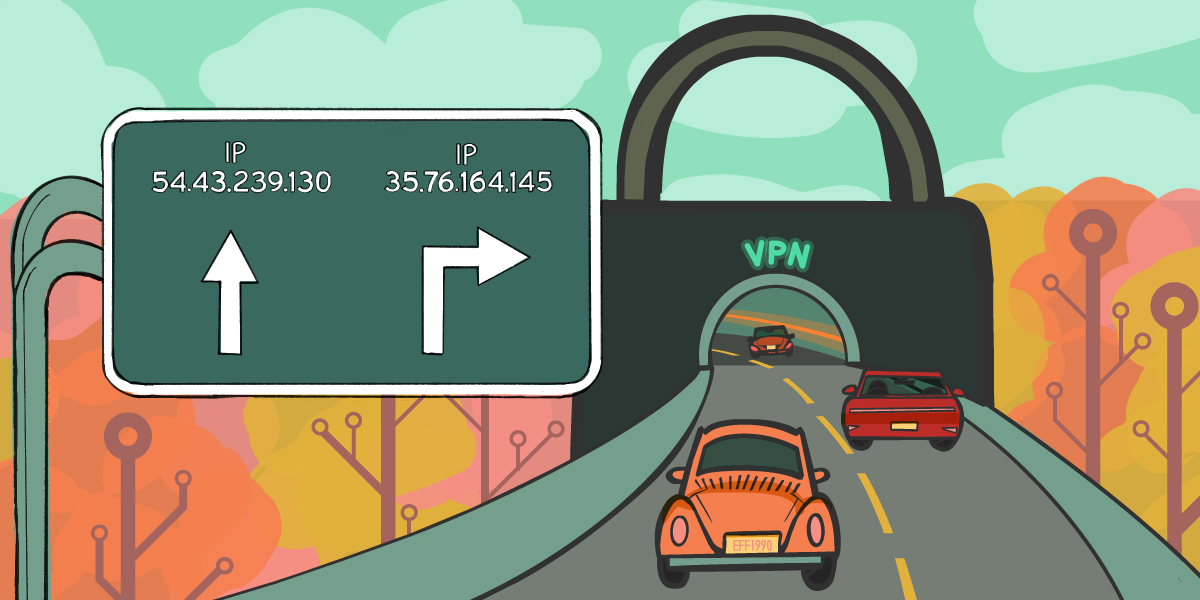
When state lawmakers attempt to rewrite how the internet works, users rely on courts to recognize that laws can’t make technical impossibilities a reality. That’s why we were happy to see that a court has blocked Utah’s attempt to outlaw the privacy protections of Virtual Private Networks (VPNs).
In a win for digital rights, a federal judge has
issued a preliminary injunction
blocking Utah’s SB 73, the state’s draconian
anti-VPN age verification law
. The decision comes as EFF
submitted our comments
to the Utah Department of Commerce, detailing how forcing platforms to detect and block privacy-preserving tools undermines user privacy and security worldwide while demanding the impossible.
What SB 73 Does
Signed
into law earlier this year
, SB 73 attempted to regulate adult websites by requiring them to block VPN users or to identify the physical location of visitors using them or similar tools that mask their network traffic. It even went so far as to prohibit websites from offering instructions on how to use a VPN to bypass these checks. This made Utah, to EFF’s knowledge, the first state in the nation to target the use of VPNs to avoid legally mandated age-verification gates.
The Utah federal court
halted enforcement
of the law's VPN provisions last week,
uling that the law likely violates the U.S. Constitution’s prohibition on passing laws that significantly burden businesses and people outside Utah’s borders.
SB 73 burdens the rights of all internet users outside of Utah because it requires adult websites to either know every visiting user’s physical location, and then block those in Utah, or to verify every visitor’s age just in case they might be in Utah. The law’s “actual-location provision in practice requires an entity to perform age verification services for every user visiting its site from any location because the entity would violate the law if even one of those users happened to be obfuscating,” the court wrote. The court
… [more]