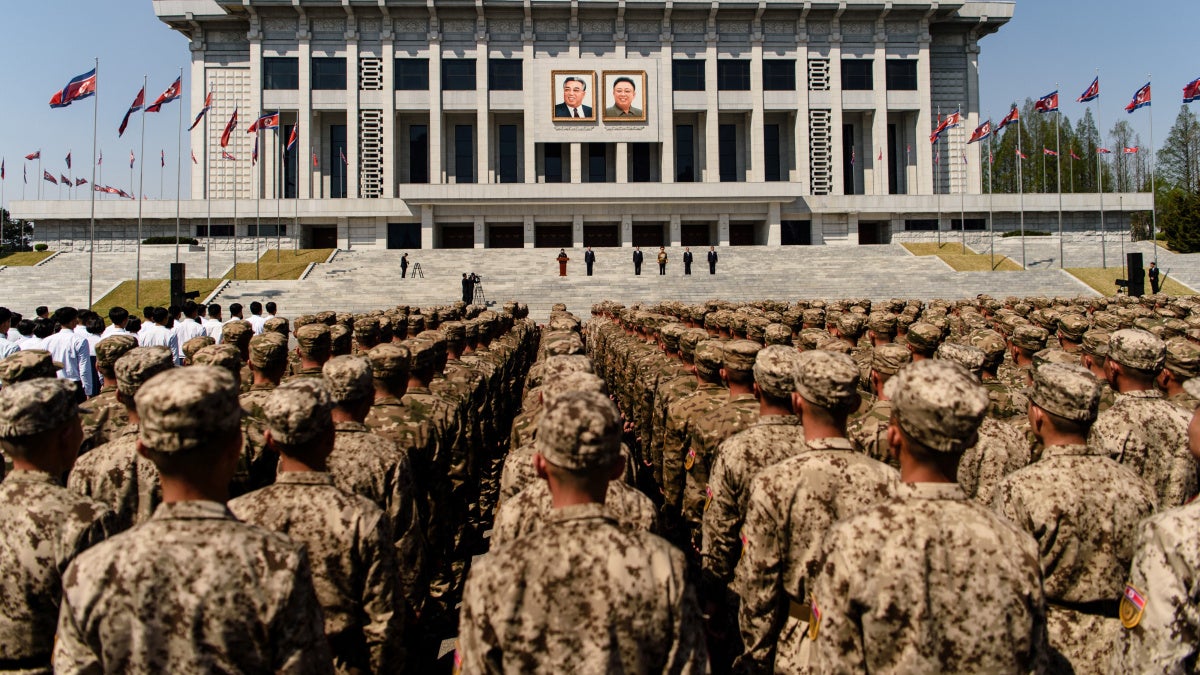
Soldiers participate in a commemorative march in Pyongyang, North Korea, on April 25, 2025, to mark the 93rd anniversary of the Korean People's Revolutionary Army.
United Nations Special Rapporteur Elizabeth Salmón addressed a UN General Assembly committee on October 27 following reports that North Korean authorities had increased the use of public executions, including for recent offenses.
In her report, Salmón characterized the government’s use of the death penalty as “a criminal sanction [and] means of social, political and ideological control,” alongside expanded surveillance and tightened restrictions on basic freedoms.
The report corroborates Human Rights Watch research documenting heightened ideological control since the start of Covid-19 and a recent Transitional Justice Working Group report that found death sentences in North Korea increased sharply since 2020, particularly for those accused of distributing foreign media in the country.
As the United States and South Korea pursue diplomatic dialogues with North Korean leader Kim Jong Un, the focus on security issues should not again displace North Korea’s many rights issues.
UN human rights offices and independent experts have continued to monitor North Korea’s deteriorating rights situation despite difficult circumstances. However, UN member countries have not acted on this reporting and focused entirely on North Korea’s threats to international peace and security. But the threats North Korea poses are facilitated and directly linked to the country’s rights violations. As Salmón said, governments need to “[integrate] human rights considerations into all future engagement with [North Korea].”
Multiple UN findings, statements by the UN Office of the High Commissioner for Human Rights, and UN Human Rights Council resolutions have affirmed that rights violations—forced labor, in particular—have ena