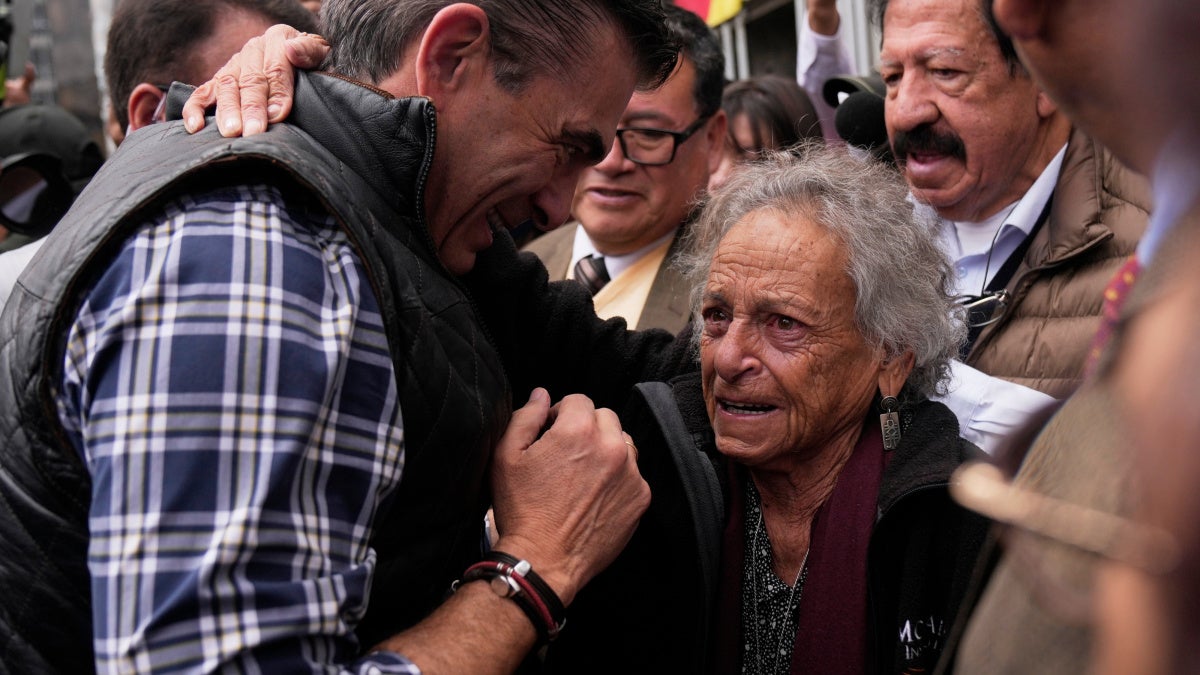
Bolivian President Rodrigo Paz (left), meets with activist Amparo Carvajal before entering the offices of the Permanent Assembly of Human Rights of Bolivia (APDHB), in La Paz, Bolivia, November 20, 2025.
Bolivia’s government published two decrees in early August that threaten the right to freedom of association and the work of human rights defenders.
One decree states that non-governmental organizations must register with the Vice-Ministry of Public Investment and External Financing before carrying out any project that involves “technical or financial cooperation,” regardless of the source of funding. Organizations must renew their certification every three years and complete an annual update.
The same Vice-Ministry will be charged with evaluating whether the organization’s objectives align with the “country’s development plans.” If it deems them unaligned, the Vice-Ministry can order unspecified “corrective measures”.
Bolivian officials have framed the new registry as part of a broader modernization effort and have cited the Financial Action Task Force’s (GAFI) anti-money laundering standards as justification. However, the decree goes much further than reasonable measures to ensure transparency and prevent money laundering.
Under the International Covenant on Civil and Political Rights and the American Convention on Human Rights, Bolivia is required to respect the rights to freedom of association and expression. Any restrictions on these rights must be clearly defined, and necessary and proportionate to achieve a legitimate goal, such as protecting the rights of others.
The UN Special Rapporteur on Freedom of Peaceful Asembly and Association has noted that associations should, in general, be “free to determine their status.” The Rapporteur has also said that suspension or dissolution of a an association should only be possible in exceptional cases, w