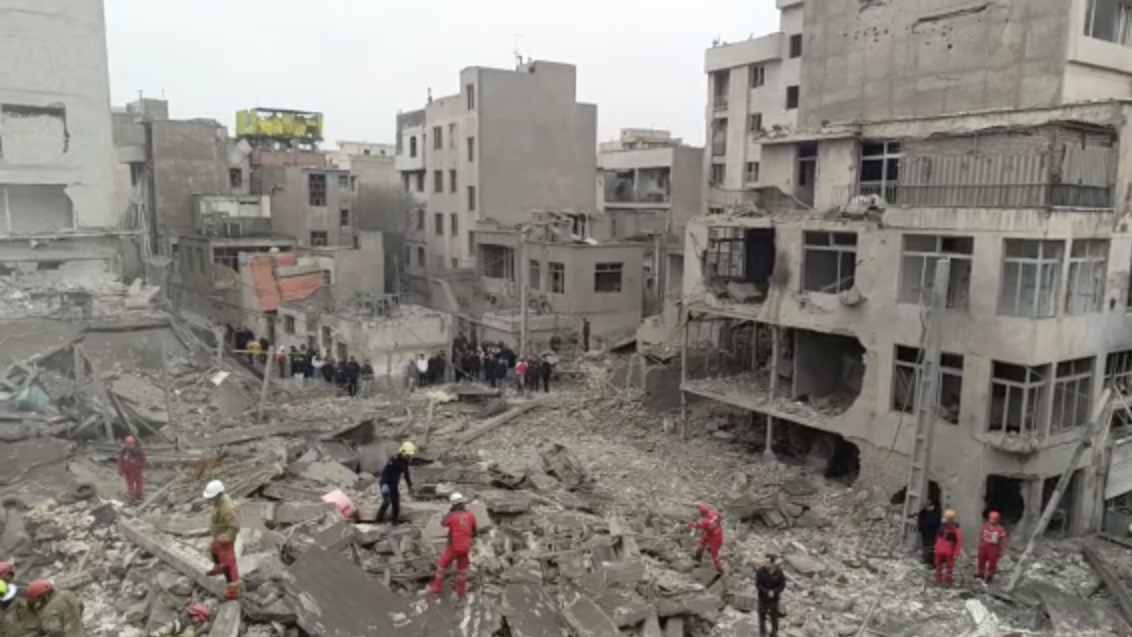
Deadly US-Israeli coalition attacks on densely populated areas of Tehran in March 2026, that killed and injured dozens of civilians, must urgently be independently and impartially investigated to determine whether they constitute war crimes, Amnesty International said in a
new briefing
published today. The organization is calling for accountability and redress for possible indiscriminate attacks in violation of international humanitarian law as hostilities continue to escalate between the USA and Iran.
The recent escalation between the USA and Iran – with reports of civilian casualties in a deadly US attack on a wedding celebration in Hormozgan province on 1 September 2026, and Iran’s retaliatory attacks on Jordan, Kuwait, Iraq and Bahrain – demonstrates that the risks to civilians across the region remain high.
The organization’s investigation into air strikes on Niloufar, Resalat, and Javadieh neighbourhoods of Tehran between 1 and 13 March 2026 found evidence that explosive weapons with wide area effects were used in densely populated areas, killing and injuring civilians and causing extensive damage to homes, businesses and other civilian buildings.
In Resalat, air strikes destroyed or damaged a facility belonging to one of the Basij battalions of the Islamic Revolutionary Guard Corps (IRGC), as well as three nearby buildings – at least one of which was a residential building – killing 16 civilians. In Niloufar and Javadieh, at least 25 civilians were killed during air strikes that caused destruction or damage to police stations as well as widespread damage to nearby homes and other civilian structures.
Police are normally considered civilians under international humanitarian law unless they are incorporated into the armed forces or are directly participating in hostilities. In Iran, the police force is part of the broader armed forces structure and therefore police stations may qualify as military objectives. While the USA and Israel announced strikes
… [more]