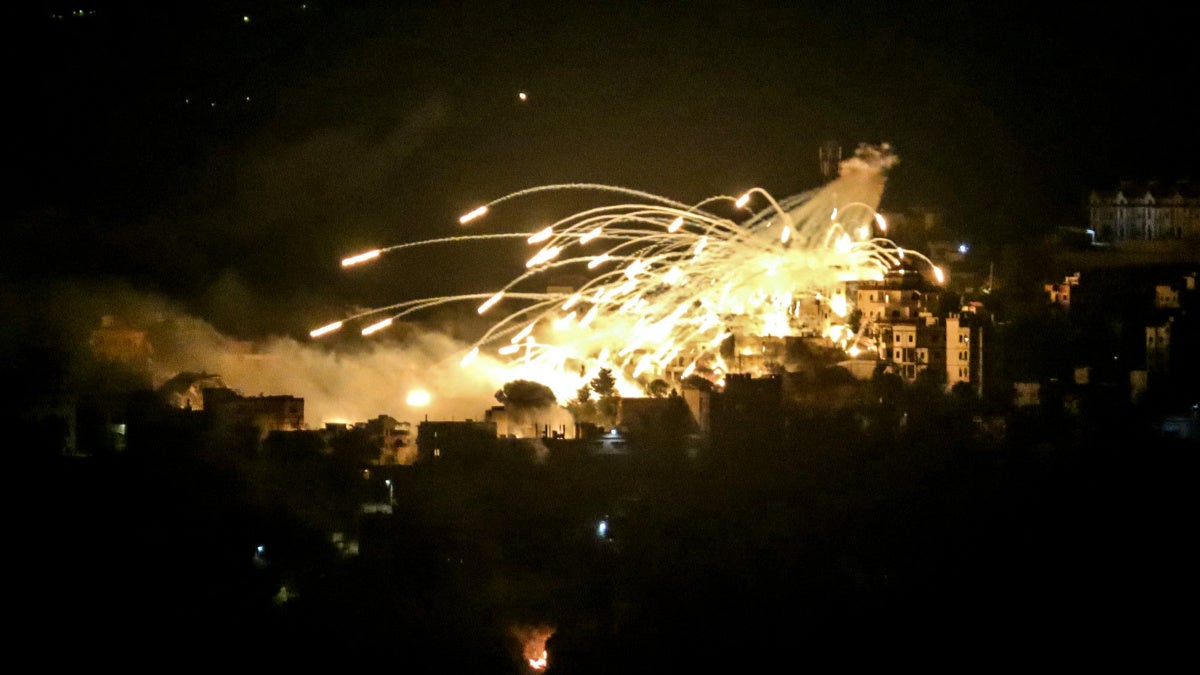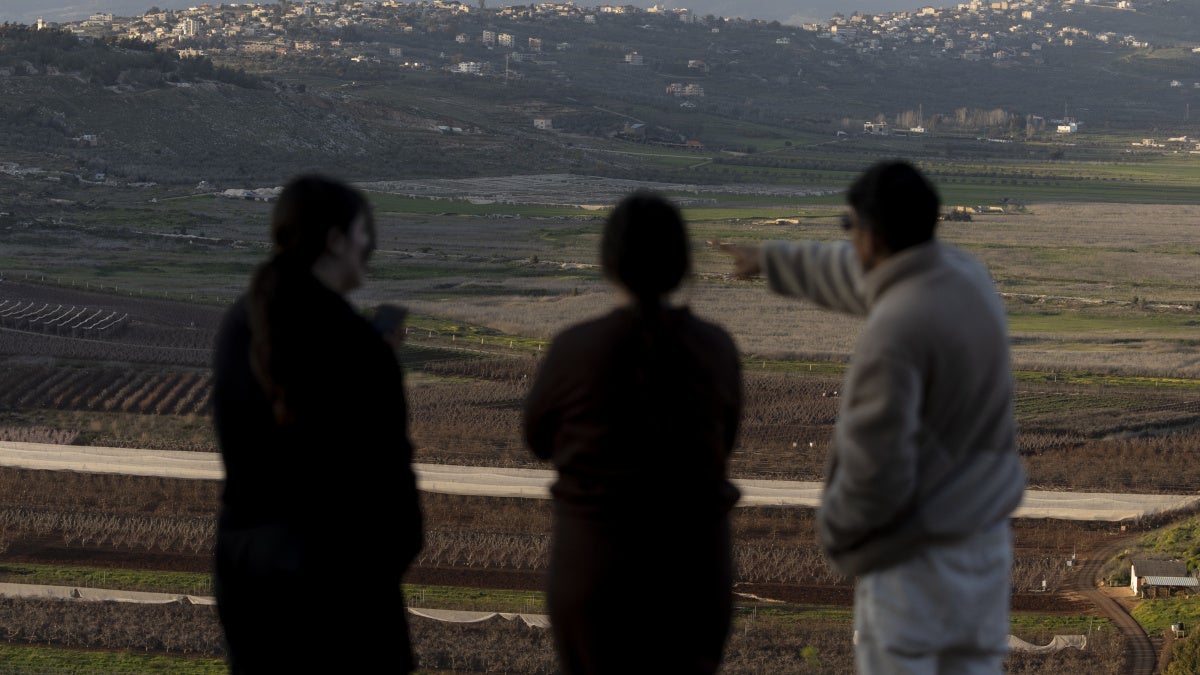
Israelis look at the border with Lebanon from a position in the northern village of Metula on March 5, 2026, after Hezbollah launched rockets at Israel during the ongoing conflict.
© March 2026 Amir Levy/Getty Images
(Beirut, September 9, 2026) – Hezbollah unlawfully fired widely banned cluster munitions into a town in northern Israel on March 4, 2026, and again on March 15, Human Rights Watch said today.
The attacks, neither of which caused civilian casualties, took place during a major escalation in the conflict between Israel and Hezbollah beginning on March 2 as part of the wider war in the region involving Iran and the United States.
“Cluster munitions should not be used under any circumstances, and their use may amount to a war crime,” said Patrick Thompson, crisis, conflict and arms researcher at Human Rights Watch. “Not only are they inherently indiscriminate, but unexploded submunitions can kill and injure civilians long after hostilities conclude.”
Cluster munitions are fired in rockets, missiles, and projectiles, or dropped from aircraft. They typically disperse in the air, spreading dozens of explosive submunitions, or bomblets, indiscriminately over a large area. Many fail to explode on initial impact, leaving duds that can kill and maim, like landmines, for years or even decades, unless cleared and destroyed.
Human Rights Watch researchers visited Metula in May and confirmed the use of cluster munitions, analyzed the impact sites, and interviewed four witnesses. Hezbollah claimed responsibility on social media for rocket attacks against Metula on March 4 and 15, but in response to a Human Rights Watch request for comment, denied using or even possessing cluster munitions.
Despite ceasefires that went into effect on April 17 and June 20, Israeli attacks have killed at least 4,381 people in Lebanon since the beginn